Close

Alexander Lelidis

Software Engineer

Download Resume

About Me

Staff-track engineer with 12+ years building production systems at Microsoft/GitHub, Disney Research, and ESRI. Proven record of defining technical strategy, shaping architecture across teams, and delivering high-leverage systems spanning developer tools, AI, computer graphics, and GIS.

Skills

Experience

Microsoft

Senior Software Engineer

  • Drove performance strategy for GitHub Issues, shifting the product from server-bound navigation toward instant, client-cached experiences; improved LCP below 200 ms (2% to 35%) and reduced GraphQL P99 latency from 140ms to 20ms.
  • Authored the org-wide GraphQL Engineering Design Record, aligning backend strategy across 5+ teams and shaping long-term API evolution for GitHub Issues; served as DRI shaping 10 epics and leading architecture reviews with product and platform partners.
  • Mentored engineers into ownership of critical systems, directly contributing to 2 promotions and improving team autonomy; led technical interviews and onboarded teammates into high-impact workstreams.

Disney Research Studios

Machine Learning Research Engineer

  • Architected and scaled a production ML pipeline for stylized volumetric effects, processing 10,000+ frames across 3 major film productions and improving VFX iteration speed.
  • Co-owned productionization of the neural style-transfer workflow behind Elemental's fire characters, unlocking art-directable character-quality fire at full production scale (~20x speed-up, from minutes to seconds per frame).
  • Featured in WIRED: Pixar Used AI to Stoke the Flames in Elemental.

ESRI

Software Engineer

  • Developed core functionality for ArcGIS Urban, a browser-based 3D urban planning platform built with React and the ESRI JavaScript API.
  • Designed and delivered StreetView integration end-to-end; published 2 open-source NPM packages to accelerate adoption across the ecosystem.
  • Built telemetry and analytics workflows on AWS Redshift + Metabase, enabling more data-driven product decisions and tighter feedback loops.

Antavi GmbH

Software Engineer

  • Built core features of a real-time command, control, and communication platform (React, PouchDB) for event safety, now deployed at 80+ events including Oktoberfest.
  • Designed and built the backend API on AWS and a GIS visualization pipeline (Mapbox, OSRM), giving field teams real-time situational awareness across medical, security, and crowd management.

ETH Zurich

Research Assistant at IFT

  • Getting insights of big mobile crowd GPS data through the implementation of trajectory analysis in Python
  • Visualization of complex relations by creating web-based software for crowd analysis in Js
  • Research and development of new analysis methods using GPS data to provide crowd flow direction estimates

WeltWeitBau GmbH

Software Engineer

  • Development of software civil engineering tools in Java and C++
  • Reducing software quality assurance time by implementing continues integration tests with Selenium
  • Teaching training courses for the utilisation of the company’s products to new clients

Education

ETH Zurich

Sep 2017 - Sep 2020

Master of Science in Computer Science (1.3)

Technical University Berlin

Oct 2012 - Apr 2016

Bachelor of Science in Computer Science (1.9)

Werner-von-Siemens Gymnasium

Mai 2006 - Mar 2012

German Abitur (2.1)

Projects

Should I be worried?

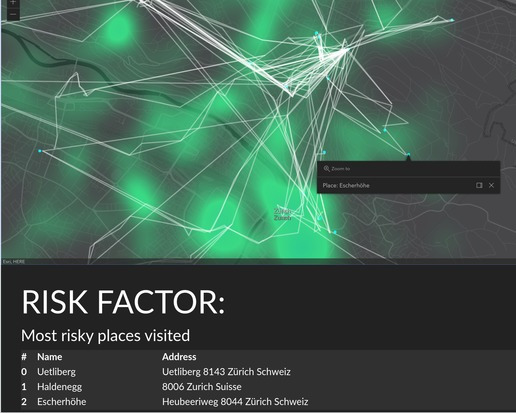
Based on a collection of Google Location History data sets, we compute a 3D spatiotemporal infection risk map that reflects the risk of being infected when residing at or passing through places on that map. The map can be integrated over a trajectory to yield a risk score. This can be used to recommend users to stay at home or even get tested for SARS-CoV-2.

Hitchhiker's guide to the galaxy door

Inspired by the movie hitchhiker's guide to the galaxy I created a small system, which replicates the behaviour of the doors in the spaceship.

View Project
Advanced machine learning

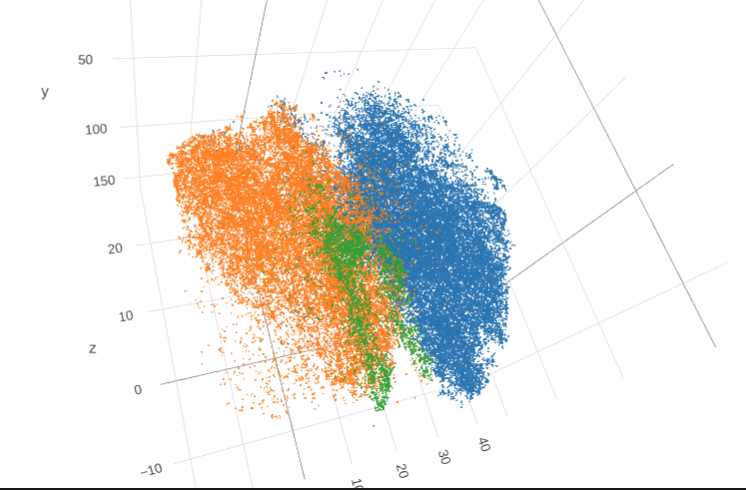
This project consists of 5 subprojects in the medical subfield of machine learning. Various tasks like multi class classification and regression were performed. This task were takled using LSTMs, decision trees or suport vector machines.

View Project
FFTGAN: Generative Adversarial Network system for generating cosmological images in the frequency space

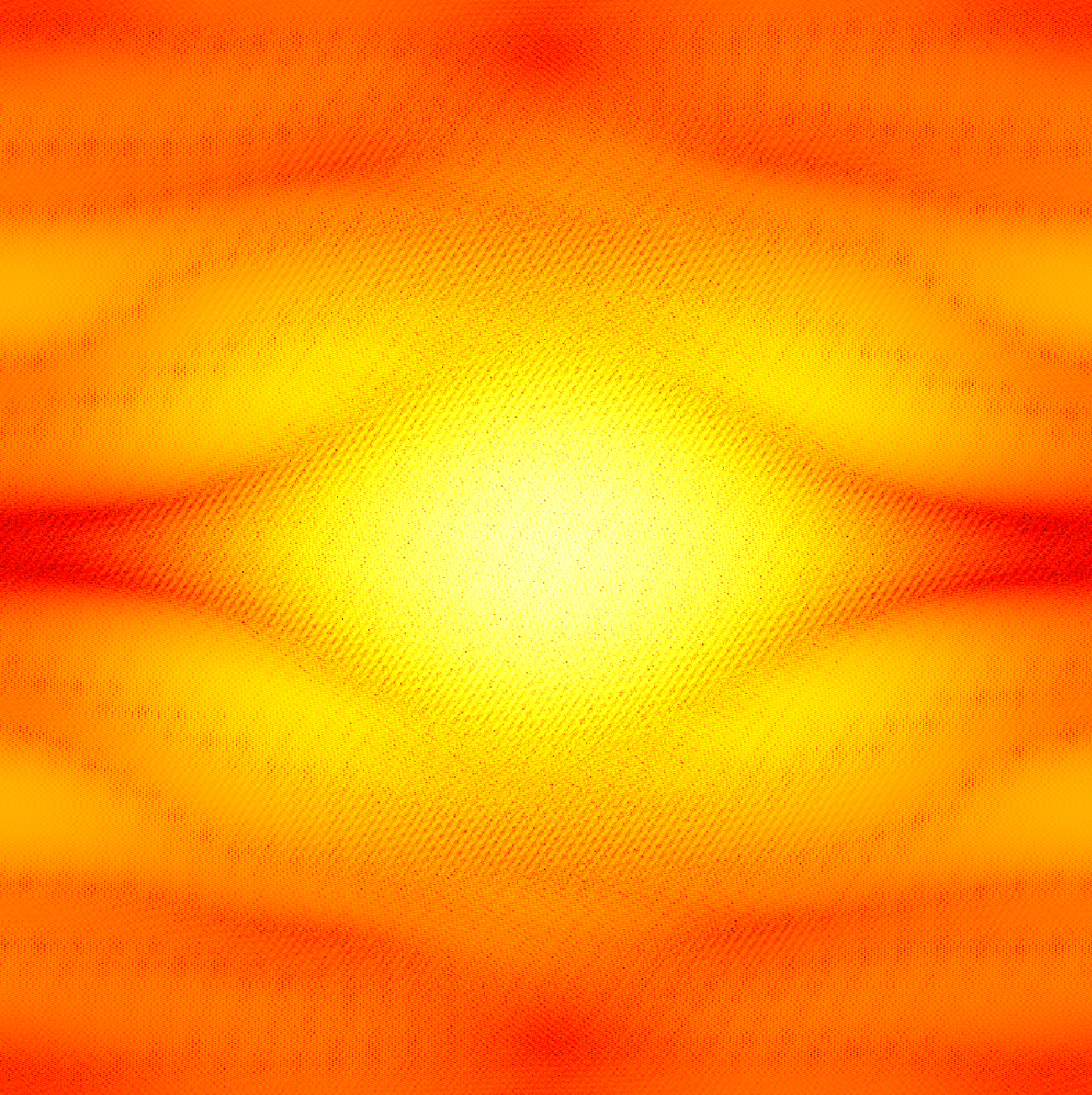
In this project, we discuss techniques to quantify the quality of cosmological images in the frequency domain. The problem consists of two parts. First, we had to find a way to quantify the concept of a ”cosmological image”. Second, we had to use knowledge and results which we obtained to generate a ”cosmological image”. The images are large, which required careful choice of techniques for discrimination and generation. Our research shows that classification on images which have strong local characteristics, which don’t have a fixed global location can be accomplished better in the frequency domain.

Download report
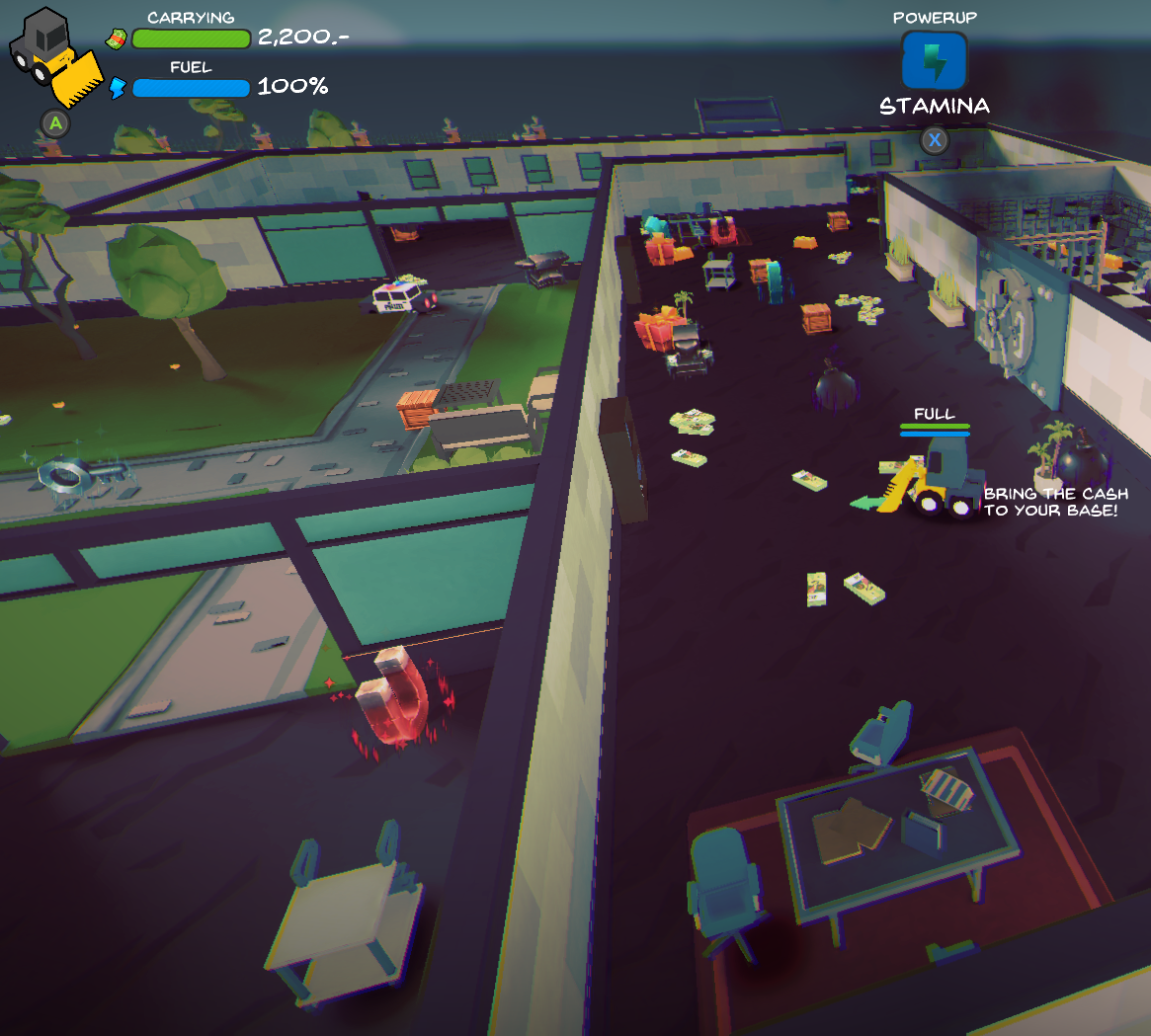
Game dev: That failed bank robbery

That failed bank robbery is a competitive local multiplayer game for 2 or 4 players in which two teams of thieves try to rob the same bank at the same time. Drive unlikely vehicles, pick up all the cash, steal your opponent’s loot, use a vast arsenal of different power-ups and get out there before the police catch you! The game was created as part of the Game Programming Lab at ETH Zürich during spring 2018 and will be presented at the GAMESCOM 2018 in Cologne.
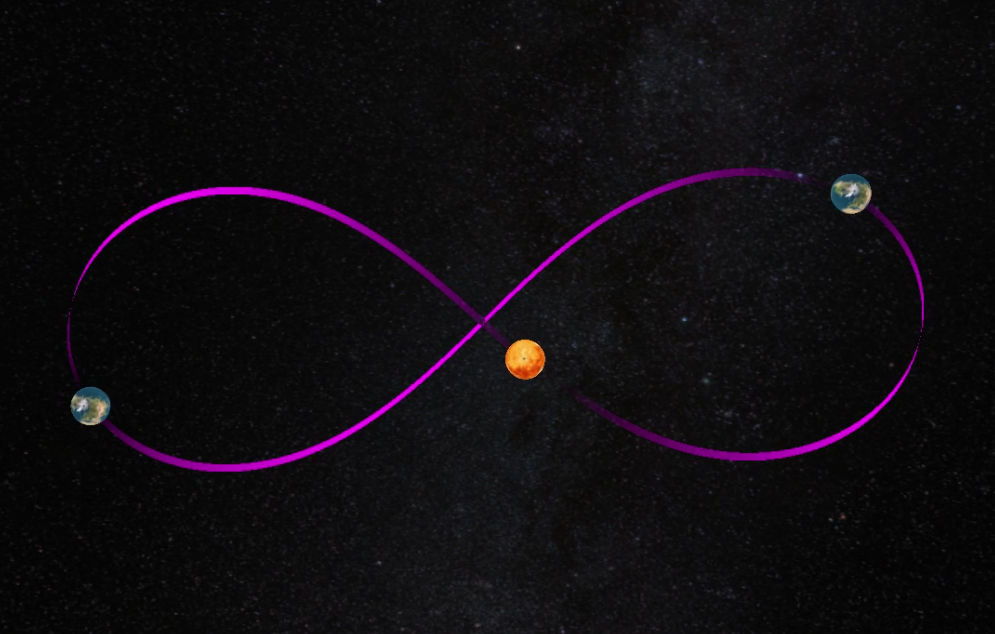
N-Body simulation with collision handling

Simulating planets and asteroids in space is an intersecting multi-dimensional challenge. Due to the nature of the setup, we have to solve a few hard challenges to achieve a real-time engine. The first part of the problem is the numerical computation of gravitational forces. This problem is today only solved analytically for 2 bodies. Since our objective is to have an asteroid field we using numerical methods to approximated these forces. Once the bodies start to move around the second challenge is to handle collisions and compute physically correct responses. Again this needs to be done in rather fast fashion to be able to run in real-time.

View Project
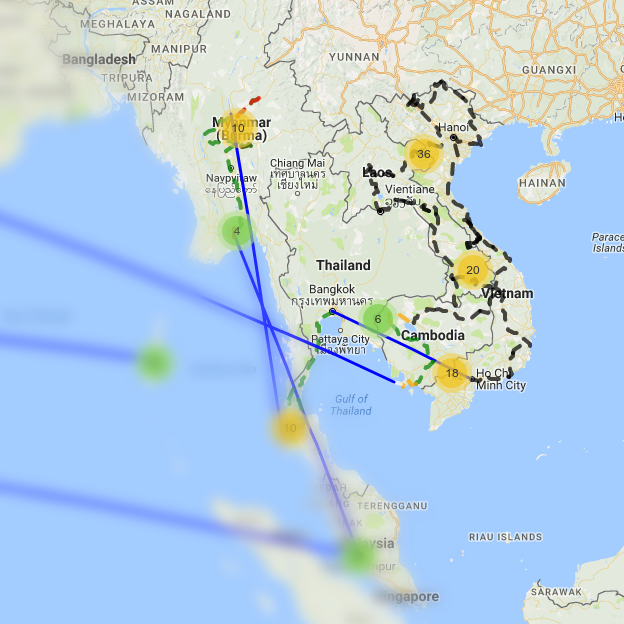
tripTrackr

The motivation behind this project was to understand the full stack developement of an app including a backend. Therefore I chose to create a travel app, where users can create a personal webpage with their travel trajectory and share it with friends.

View Project
WebGL interface for the NORI renderer

Nori Webinterface is a web platform, functioning as a frontend for the Nori Raytracer. It features a user management system, allowing users to save and load scenes, which they can edit in a 3D editor in the browser. Scenes can then be rendered by the platform and will be streamed, piece by piece to the browser. The server uses Django to provide a REST API which is used by an Angular Web App. THREE.js is used for the 3D Editor. The rendered image is streamed to piece by piece via a Websocket.

View Project
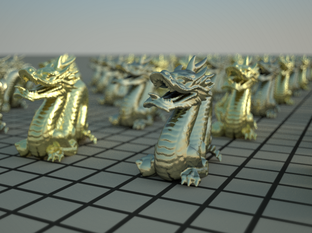
Generating BSDF layered material files

I decided to implement the paper A Comprehensive Framework for Rendering Layered Materials from Jakob Wenzel. The paper presents a new method for rendering material consisting of multiple layers by precomputing the reflection model. The technique supports arbitrary composition of materials and correctly accounts for multiple scattering within and between layers. In terms of a rendering system, the models are efficient to evaluate. By exploiting the concepts of sparse matrix representation, the precomputed values can be stored space efficiently, even for high glossy materials, and be reused for different scenes.

View Project
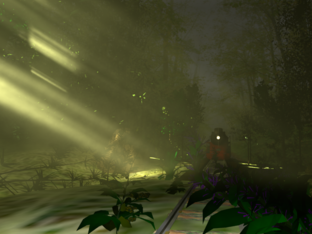
Physically based renderer

I want to render a complicated forest scene in the morning. The scene should contain a rarely used train track on which you can see a very old Swiss-made train approaching. The train will be a steam locomotive, which emits a lot of dark steam. Because the scene takes place in the morning it will be very foggy, so that you can see the sun rays passing through the forest canopy. To achieve that, I took the Nori renderer and implement the necessary features, like Volumetric Photon mapping with beam radiance estimate or an environment map emitter with importance sampling.

View Project
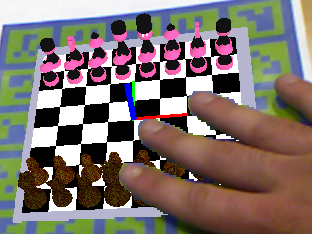
Thermal augmented reality chess

The goal of this project was to create an augmented reality chess game. To achieve thie we used two cameras - a RGB-D camera and a thermal camera. The RGB camera is used to track a paper checkerboard with augmented reality markers which are used to estimate the pose of the camera. The video with the resulting camera matrix are used by OpenGL to augment the video with the virtual game objects. We use a thermal camera for the detection of the user input.

Download Project report
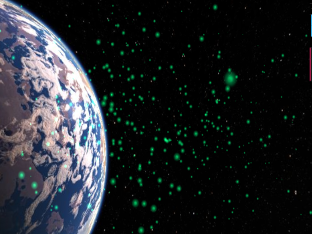
N-body simulation using particles

I wanted to learn the basics of three.js and implement a simple particle based n-body simulation. The whole simulation runs in the browser in real time and allows parameter changes on the fly.

View Project
Research

Invisible to Machine Perception: Attacking Pose Estimators with Attribution Methods

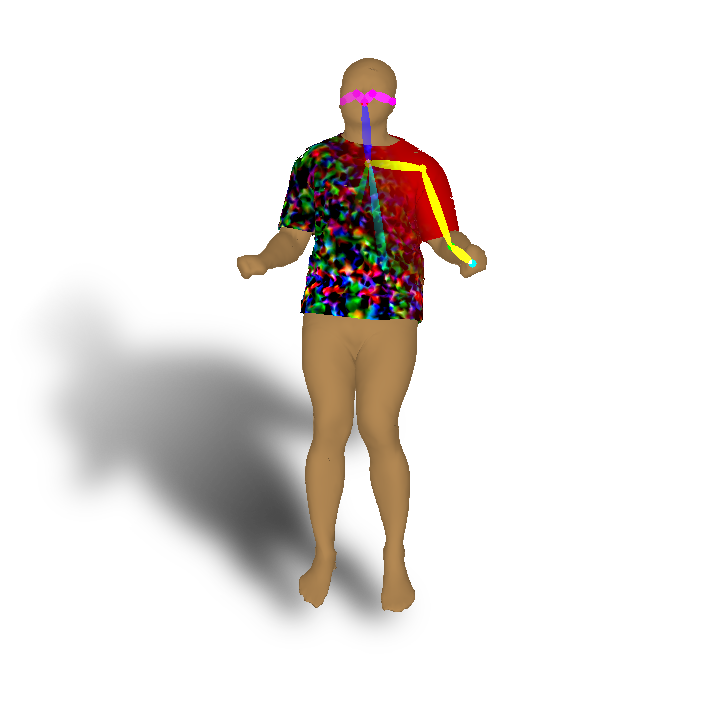
Neural networks are currently the most accurate techniques to tackle computer vision problems. However, with the increase of accuracy, an increase in complexity has emerged leading to black- box systems. This is especially problematic in safety-critical situations. In this thesis, we are using various attribution methods in 2D or 3D to understand a human pose estimation model. During this process, we develop a new method for the 3D attribution case, called 3D Saliency map. To test the robustness of this model we identify adversarial examples in 2D and propose a new method in the 3D domain for computing adversarial texture for clothing. We show that our approach works by rendering a video of simulated meshes with and without the adversarial texture and feeding into the human pose estimator. To quantify the results we develop three different metrics, measuring various aspects of the attacks.

Download Thesis

Geometry Representations for Big Geometry Data with Unsupervised Feature Learning

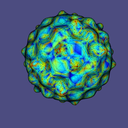
In this paper, we present an exploration of analyzing geometries via learning local geometry features. After extracting local geometry patches, we parameterize each patch geometry by a radial basis function-based interpolation. We use the resulting coefficients as discrete representations of the patches. These are then fed into feature learning algorithms to extract the dominant components explaining the overall patch database. This simple approach allows us to handle general representations such as point clouds or meshes with noises, outliers, and missing data. We present features learned on several patch databases, highlighting the utility of such an analysis for geometry processing applications.

Download paper

STRUCTURE-AWARE SURFACE RECONSTRUCTION WITH SPARSE MOVING LEAST SQUARES

Reconstructing the surface underlying a given point cloud is a fundamental problem in geometry processing. Moving least squares solves this problem efficiently using local fits. However, locality comes at the expense of losing a global view of the geometry, leading to inferior results when there is missing data or significant amount of noise or outliers. Global methods are more robust, but they are expensive to compute. In this thesis, we will combine global and local methods in an efficient manner by using learned local geometry bases and sparse moving least squares fits.

Download Thesis

Travelling

Exploring the world

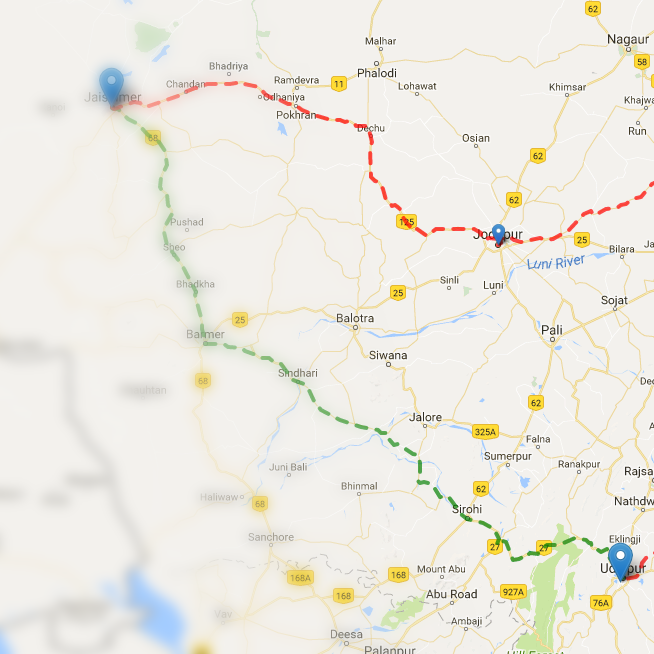
In my free time, I love to travel the world, doesn't matter if in India on a Royal Enfield or in Mongolia on a horseback.

View Stats View trajectory

Get in Touch